Yes Beer is Healthy

Posted by wyneman under
“Beer is proof that God loves us and wants us to be happy."

Benjamin Franklin said it; it must be true! 


Drinking beer in moderation can actually benefit your health. Don’t believe me? In Egypt beer has been used as a remedy for over 100 illnesses (okay maybe that was in 1600 B.C., but nonetheless- fascinating!). Presently speaking, how can beer be good for you? Oh, let me count the ways:


  1. Beer is a source of B-complex vitamins. These vitamins contribute to a healthy nervous system, proper digestion, our body’s production of energy, and healthy skin, hair, and nails. Vitamin B-complex also helps to improve and stabilize moods.
  2. Beer is fat free and cholesterol free. Also, the average beer contains only 150 calories and is caffeine free.
  3. Beer can reduce stress. This one should come as no surprise but alcohol has been shown to reduce stress through its relaxing effects on the body and through the social environment that often accompanies drinking the beverage.
  4. Beer can help you sleep better. Lactoflavin and nicotinic acid, both found in beer, are known to promote sleep. Also one of the main ingredients in beer, hops, has been used for centuries as a sedative and has even been used to cure insomnia.
  5. Beer improves blood circulation and can help prevent heart disease. Beer increases HDL, high-density lipoprotein (a.k.a. the “good cholesterol”), which reduces blood clotting.  Studies have been done on this and have found that cardiovascular patients who had one beer a day lived longer.
  6. Beer is a good source of fiber. One liter of beer can provide up 60% of our daily recommended  fiber thanks to the malted barely it contains.
  7. Drinking beer can improve bone density. Who needs milk? Beer contains silicon which has been known to benefit bone health. This is especially true for men. A study has shown that men who drink 1-2 beers a day were able to increase their bone mineral density up to 7%. This has also been found to be true with other alcoholic beverages (especially wine- which can have the same effect on women).
  8. Beer can help battle cancer. Recent research has been done to prove that the bioactive compounds in beer can help battle cancer.
  9. Beer can speed up a metabolism. Recent research has been done to prove this as well. And again, it has to do with the bioactive compounds that are found in beer.
  10. Beer can help with brain function. A study published in Alcoholism: Clinical & Experimental Research has shown that men and women who drink alcohol in moderation can lower their risk of “mental impairment” by 40%.
There you have it, 10 ways to justify your beer consumption. There are actually many more ways beer can benefit your health and if you know of any, feel free to add to this list by writing them below!


For example, It’s fairly common knowledge that beer (or lager, or ale, or stout!) has a relaxing effect on the body and can reduce stress, but there are a myriad of other health benefits of this potent potable that are probably not as apparent during your local happy hour. There have never been better reasons to enjoy a cold beer.

Cheers to beer: Amazing benefits!


source college Jolt

AIDS Vaccine Shows Some Success

Posted by wyneman under
A new AIDS vaccine tested on more than 16,000 volunteers in Thailand has protected a significant minority against infection, the first time any vaccine against the disease has even partly succeeded in a clinical trial.
Skip to next paragraph
http://t0.gstatic.com/images?q=tbn:ZAI4zUOmdRVrfM:http://www.senado.gov.br/sf/senado/portaldoservidor/jornal/Jornal76/Imagens/vacina.jpg


Scientists said they were delighted but puzzled by the result. The vaccine — a combination of two genetically engineered vaccines, neither of which had worked before in humans — protected too few people to be declared an unqualified success. And the researchers do not know why it worked.

“I don’t want to use a word like ‘breakthrough,’ but I don’t think there’s any doubt that this is a very important result,” said Dr. Anthony S. Fauci, director of the National Institute of Allergy and Infectious Diseases, which is one of the trial’s backers.
“For more than 20 years now, vaccine trials have essentially been failures,” he went on. “Now it’s like we were groping down an unlit path, and a door has been opened. We can start asking some very important questions.”

Results of the trial of the vaccine, known as RV 144, were released at 2 a.m. Eastern time Thursday in Thailand by the partners that ran the trial, by far the largest of an AIDS vaccine: the United States Army, the Thai Ministry of Public Health, Dr. Fauci’s institute, and the patent-holders in the two parts of the vaccine, Sanofi-Pasteur and Global Solutions for Infectious Diseases.

Col. Jerome H. Kim, a physician who is manager of the army’s H.I.V. vaccine program, said half the 16,402 volunteers were given six doses of two vaccines in 2006 and half were given placebos. They then got regular tests for the AIDS virus for three years. Of those who got placebos, 74 became infected, while only 51 of those who got the vaccines did.
Although the difference was small, Dr. Kim said it was statistically significant and meant the vaccine was 31.2 percent effective.
Dr. Fauci said that scientists would seldom consider licensing a vaccine less than 70 or 80 percent effective, but he added, “If you have a product that’s even a little bit protective, you want to look at the blood samples and figure out what particular response was effective and direct research from there.”
The most confusing aspect of the trial, Dr. Kim said, was that everyone who did become infected developed roughly the same amount of virus in their blood whether they got the vaccine or a placebo.
Normally, any vaccine that gives only partial protection — a mismatched flu shot, for example — at least lowers the viral load.

That suggests that RV 144 does not produce neutralizing antibodies, as most vaccines do, Dr. Fauci said. Antibodies are long Y-shaped proteins formed by the body that clump onto invading viruses, blocking the surface spikes with which they attach to cells and flagging them for destruction.

Instead, he theorized, it might produce “binding antibodies,” which latch onto and empower effector cells, a type of white blood cell attacking the virus.
Whatever the vaccine does, he said, it does not seem to mimic the defenses of the rare individuals known to AIDS doctors as “long-term nonprogressors,” who do not get sick even though they are infected. They have low viral loads because they block reproduction in some way that is still mysterious.
“If we knew what immune response did it, we’d be able to be a lot more efficient in targeting it,” Dr. Kim said.

Also, the RV 144 tested in Thailand was designed to combat the most common strain of the virus circulating in Southeast Asia. Different strains circulate in Africa, the United States and elsewhere, and it is not clear that the vaccine would have similar results, even in modified form.
The thousands of Thais chosen were a cross-section of the Thai young adult population, not just high-risk groups like drug injectors or sex workers, Dr. Kim said.
One of the substances that were combined to make RV 144 is Alvac-HIV, from Sanofi-Pasteur, a canarypox virus with three AIDS virus genes grafted onto it. Variations of Alvac were tested in France, Thailand, Uganda and the United States; it was found safe but generated little immune response.

The other, Aidsvax, was originally made by Genentech and is an engineered version of a protein found on the surface of the AIDS virus; it is grown in a broth of hamster ovary cells.
It was tested in Thai drug users in 2003 and also in gay men in North America and Europe; it did not protect them against infection, and Genentech spun off the rights to develop the vaccine.
In 2007, two trials of a Merck vaccine in about 4,000 people were stopped early; it not only failed to work but for some men seemed to increase the risk of infection.
Combining Alvac and Aidsvax was a hunch by scientists: If one was designed to create antibodies and the other to alert white blood cells, might they work together even if neither worked alone?

Mitchell Warren, executive director of AVAC, the AIDS Vaccine Advocacy Coalition, which pushes for vaccines and other forms of prevention, was enthusiastic about the trial data.
“Wow,” he said. “This is a hugely exciting and, frankly, unexpected result. It changes our thinking in ways we hadn’t anticipated.”

“We often talk about whether a vaccine is even possible,” he added. “This is not the vaccine that ends the epidemic and says, ‘O.K., let’s move on to something else.’ But it’s a fabulous new step that takes us in a new direction.”
Mr. Warren said the finding showed the need for large human trials, expensive as they are. Studies in mice and monkeys have not been good at predicting what would work in people, and small human trials in which researchers test results by looking for antibodies in blood have limited value.

Dr. Fauci agreed.
“This is not the endgame,” he said. “This is the beginning.”
Suppose that at a distance you see a short, stooped figure walking with short, slow steps. Most likely, you will conclude that the person is old. The hunched posture gives you the clue.
Why does aging contort so many bodies in this way? The reason is that many people, throughout their lives, never extend the neck to its full range, and so the muscles shorten. Long hours of reading, sewing, typing, or standing at a workbench take their toll. Eventually deposits of calcium salts in the joints complete the process of immobilization. Once this calcification takes place, nothing can be done to reverse it.
Fortunately, older persons can take action before it is too late. The best action is regular exercise that stretches the muscles and improves flexibility, with special considerations on the core muscles. This kind of response is relatively important for a number of factors that when taken for granted will only lead to serious health problems.
What Are Core Muscles?
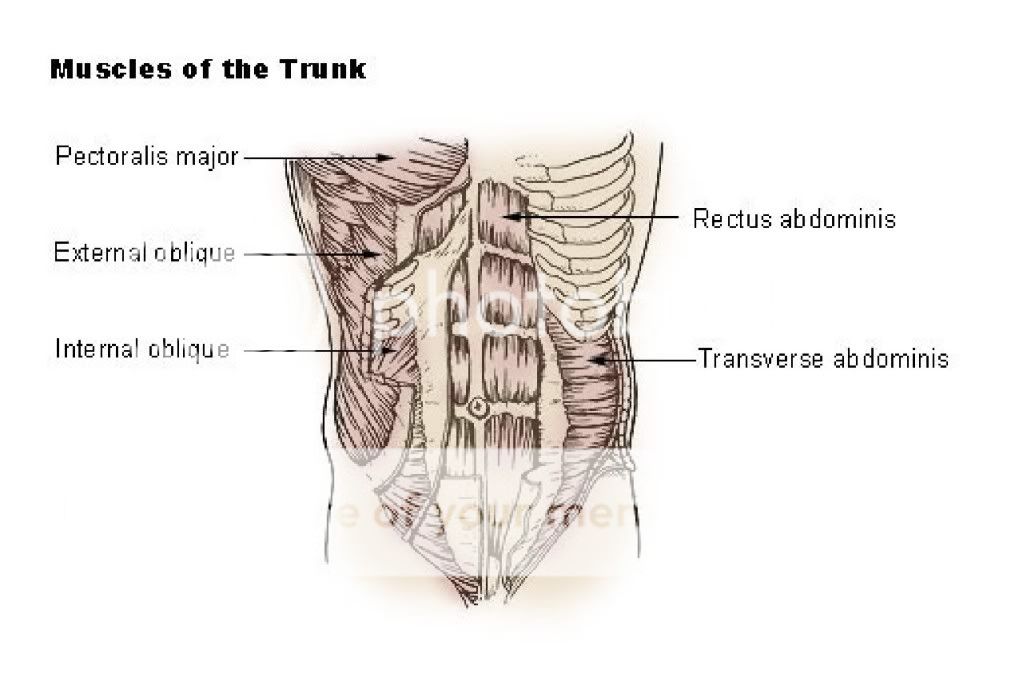
Core muscles pertain to the muscles found at the obliques, abdominals, lower back, and the glutes. These four areas of the body are the ones that usually frame the posture of a person. Hence, a good posture reflects the good condition of these muscle areas.
What people do not know is that core muscles are actually the “core” or the central part for all the strength that is needed to boost carry out different physical activities. This only means that if an individual’s core muscle is physically powerful, it will maintain equilibrium on the body and will stabilize the system every time the person is working out and moving.
Strengthening Core Muscles
The main responsibility of the core muscles is to provide enough power to the body in order to enable it to cope up with the dynamic challenges of every physical activity that a person encounters.
For this reason, many health and fitness experts have realized that it is relatively important to strengthen the core muscles than with the other muscles in the body. Through some series of experiments and research, they have found out that having a stronger core can lessen a lot of health problems concerning posture.
For instance, a well-conditioned core muscle can project good posture. It can also improve the endurance of the back all the way through the day.
Why? Because muscles that are included in the group of core muscles are actually the ones that initiate the proper stabilization of the whole upper and lower torso.
http://i598.photobucket.com/albums/tt63/ericastonesojourn/Core%20Exercises%20for%20Women/CoreMuscles.jpg
So, for those who wish to know and understand why it is important strengthen the core muscles, click here for a list of some of the benefits that you can use as references: